 At a school on Mars, a new transfer student is about to get dropped into a theatrical mess unlike anything she's dealt with before... This week on Academy 27, we delve into the theater department, and our new friend Amelia! You can catch up on old stories for free HERE, and stick around after the show, there's something extra for you at the end! You can download the story below in PDF (for free!), or keep scrolling to start your adventure... 
Stage Blocking, by Elizabeth Tock"Keep your chin up kiddo." Uncle Clarence said as he drove me to the school, "Don't let one little setback snuff out the fire in you." "Do we have a backup school to enroll me in, in case I get expelled?" I asked flatly. "Amelia, what would your mother say if she caught you talking about yourself like that?" he asked in return. "Make me find positive things about myself or the situation, probably." I said with a groan. "Alright then, try to find five positives from this." he said, about as unsure as I felt. I thought about it for a minute, "Um… I proved I'm a good team player where it counts?" "That's one." he said, somewhat excited. "I proved I can stand up for myself." I continued. "For sure. That's two." he replied. "I showed I'm good at my holo set designs?" I said racking my brain to finish the exercise. "Yeah, we can count that one I guess." he said with a chuckle. "We made a scene in front of several people, so someone may stick up for me." It was a positive for me and I was sticking to it. "I'm not sure that's exactly a positive." he replied, trying to decide if he needed to backpedal or not. "I learned I can take a hit?" This one was definitely a stretch, but I couldn't think of anything else. "You're nervous this morning so I'll allow it." Uncle Clarence said with a smirk. As he dropped me off at the main entrance he turned to give me a hug, "We'll get this figured out. But heavens forbid you do get expelled, I am looking into some other schools with openings." For being new to this whole parental figure thing, he was doing pretty good so far. "Thanks Uncle Clarence." He gave me a cheesy grin, "Stick to your guns, Brightman's don't give up! But if something happens, call me and I'll be right over." I nodded and with that he drove off. As I walked into homeroom early the next morning, Mrs. Ichinose met me at the door. "How's the eye?" "It's fine." I lied as it was still throbbing like crazy. "I heard you and Hanzo had a… lively weekend." she started, treading carefully, "I've got some ice in my office if you want to talk about it?" "I'm sure Hanzo's told everyone by now." I said coldly as we made our way to her office. "Hanzo will get to tell me his side later. We're talking now." she said kindly, "How'd all this start?" "Well it all began when we moved here." I started, putting the ice pack on my eye. * * * “Mr. Brightman,” the steward said, “we should be landing on the planet shortly.” “Thank you.” Uncle Clarence said in his businessman voice. “I hear Mars is lovely this time of year.” “Gongen.” I said, eyes fixed on the second act of Shakespeare’s As You Like It. “Come again?” Uncle Clarence asked, confused. “It’s not Mars anymore.” I repeated, looking up from my book, “The people who live there call it Gongen. I thought you knew that?” He chuckled at that, "You read too much Kitten. Nothing’s official yet, and I don't see it being true any time soon." “No, no, no. We gotta talk about that.” I said firmly, "Please stop calling me 'Kitten', I've heard you call too many of your girlfriends that for me to ever be comfortable with it." “Yep, you’re definitely Emily’s kid.” he said with a smirk, "Well what's an acceptable nickname for you then Ms. Ameila? I want us to be friends, not strangers." “I mean,” I said hesitating, "We kind of are strangers. Up until mom died, you were just a name on Birthday and Christmas cards." "I know.” he said slightly under his breath, “I don't have any excuse for not being in your life more. But I'm here now, and I'm going to try to be the best guardian and uncle I can be. So, what should I call you?" I smiled at that, "Call me Mel." As far as fresh starts went, it could have been worse. I could have been sent to an Earth orphanage. Mom died last year in the crossfire of a gang shootout; wrong place, wrong time as the police explained it to me. Something about some lowlifes trying to get in with the Cartel and getting in on the Ebon Gate’s turf. Thankfully those responsible were dealt with. Not that any of their explanations or justice helped when I was standing alone in front of her casket.. With no dad in the picture, it was going to be a bleak outlook for me if Uncle Clarence hadn’t taken me in. Yeah he was a stock boy for Feeding the Stars, but he wasn’t a serial killer. That’s what counts. Getting back into Theater at a new school, on a new planet, with a new head actor who was the director’s pet…. That was going to be the challenge. And up until about a month before “Parents Night”, it was. * * * "Mel," Mrs. Ichinose said awkwardly, "I meant why don't you start at the beginning of what led to yours and Hanzo's… disagreement the other night." "Right, sorry." I replied, "Well, it started when Mr. Shevchenko put Jorani in charge of the Parent's Night play." * * * “... a-and it's going to be a story a-about the founding of Gongen. S-So, what do you say? Will you help?” Jorani asked. Obviously, I hesitated, “So… You’re asking me to help with a theater production; when Hanzo basically forbade me from setting foot in there like my presence was going to defile the auditorium somehow?” “Y-Yes.” she replied nervously. “You sure about this?” I was honestly waiting for this to be a prank. Hanzo is the golden boy who walks around like he owns the school. A real top of the line jerk. “I-If you don’t want to h-help, I can ask s-someone else." she stammered, "I j-just know you had b-been interested before-” “No, no Jorani, I’ll do it. I just don’t want you to get in trouble with Hanzo. He's a talented guy," I hated to say it but it was still true, "but Mr. Shevchenko's given him way too much power in the department with too big an ego to go with it. I don't want Hanzo to say you're a traitor to Gongen or something just because you let me work on a show." "I t-think we'll be okay." She replied, "It's the Parent's Night s-show, Hanzo thinks something s-so small is 'beneath his talent.' He likely w-won't even set foot in the auditorium while we're r-rehearsing for that." "Mel, you're still not talking about the other night." Mrs. Ichinose said. "Sorry." I repeated, " Um, right up until dress rehearsal, Jorani was right. Hanzo was more focused on Mr. Shevchenko's big show and getting his next big role on a holodrama than our show for the Parent's." "What changed that?" she asked. "Sang Mi opened her big mouth." I replied through gritted teeth, "The hologram set program was acting buggy, so I asked her if she could take a look at it. She ran into Hanzo after she fixed it and told him what the show was. And as patriotic as he is-" "He wanted to be in the show as a main founder of Gongen." Mrs. Ichinose finished. "Exactly." I replied. "Mr. Shevchenko told him Jorani was the boss of this show, so the best he could do was be made an understudy. So Hanzo started sitting in on rehearsals, which was okay until he started complaining that the set designs for shows he was in didn't look as good as our set did." "Quite the compliment." Mrs. Ichinose said. I snorted, "Yeah, but he didn't know I was the set designer. Let alone who Jorani had made the Assistant Stage Manager." "I see. What did he do then?" Mrs. Ichinose asked. I rolled my good eye, "He started throwing a fit." "How could you sully the honor of Gongen by bringing an Earther into our theater! We're fighting for our independence and you bring scum like her into our beautiful sanctuary to the arts!" Hanzo shouted. "S-She goes to our school. S-She lives on Gongen…" Jorani said meekly. "B-Besides, you j-just said her set design was g-good…" "That's no excuse!" he fumed. I'd had enough of his high and mighty bullshit and him yelling at Jorani when I was his problem, "Hanzo you want a fight, fight with me. Jorani was just doing the job Shevchenko gave her." I snapped. "I'm not talking to you." Hanzo started. "What? You can't finish what you started?" I retorted. "You call me the enemy, yet I've gone out of my way to correct people who call this planet 'Mars' instead of by its rightful name Gongen, I've called my new home by its true name since day one. You've shunned me from the one place I hold as much reverence as you, and you know what Hanzo? If your xenophobic ass would have even let someone like me in, I would make your shows look this good too!” "And what happened after that?" Mrs. Ichinose asked. My eye throbbed remembering it, "He didn't have a comeback, and I'd embarrassed him in front of everyone. So he punched me." "Did you try to punch him back?" she asked. "Nope. I'm only dumb enough to call someone twice my size names, not try to physically fight them." I said with a slight chuckle. "Then how did he hurt his hand?" I gave her a big grin, "I ducked when he threw the second punch and he hit the wall behind me." School AnnouncementsNEXT TIME! So, I heard through the grapevine—and by the grapevine I mean that Sang Mi told me at Track Practice—by the way hi girl! You better get your time down in the second lap of your 800 meter run or Coach is gunna be maaaaad. Anyway as I was saying I heard that Tsetseg Sansar is working at a Coffee Shop—how’d that happen? And not to mention I’ve heard talk that some sort of famous Maverick, like… Mack Milgress? Jack Bildess? Wack Wilgress? Something like that, he’s been spotted in Takumi! I wonder what that’s all about? I’m sure it couldn’t have anything to do with the coffee shop thing, that’d be too wild. Wishing you luck, Tsetseg! And—Sorry Mr. Mori! No, you don’t have to yell I’ll get back to the real announcements… ahem. The Maths Club is recruiting! Like maths? Well, so do they I guess!. Oh, they have a tag line for me to read: “One plus one is two, but one plus fun in our club is you!” Well, that’s kind of cute. Anyway. Till next time, I’m your announcer from the Broadcast Club, Hee Jin! Tune in Next Week For: Coffee, Warm By James Wylder New Academy 27 stories will drop each Thursday! Read past stories and learn more about Academy 27 at: ArcbeatlePress.com/A27 Bonus FeatureWARS is Copyright Decipher Inc. WARSONG is Copyright Arcbeatle Press and Decipher Inc. WARSONG: Academy 27 is Copyright Arcbeatle Press and Decipher Inc. WARS and all associated characters and concepts are the property of Decipher inc. This is a work of fiction. Any resemblance to people, places, events past or present is purely co-incidental. Arcbeatle Press is owned and operated by James Wylder, and is based out of beautiful Elkhart Indiana. This story is copyright 2024 Arcbeatle Press and James Wylder. Edited by Jo Smiley and James Wylder. Kalingkata, Talinata, and Geraldine “JackBox” McGraw are owned by James Wylder.
0 Comments
 A school on a future Mars, tensions rising across the stars... Class is back in session! We're excited to return to Academy 27, and bring you a brand-new season of stories--every Thursday for next few months you'll be able to come back here and enjoy a new tale of mischief, adventure, romance, and school life! If you're new to the school, welcome to class! You can jump in here or catch up on our other stories by clicking HERE. If you're an old friend, welcome back! We're glad to have you. So, without further ado, take your seat, and dive in... You can download the story below in PDF (for free!), or keep scrolling to start your adventure...
The Girl With the Cat's Eyes(A screen turns on. A file opens, a video plays) Interior: Day (We are inside a school. It is, as far as schools go, rather large. Right now there are not many students in here. It would appear that class has ended for the day, and the students in front of us are enjoying the freedom of no longer having the lingering gaze of expectation laid on them by their fellow students and teachers. They're sitting in a loosely posed tableau, all of them in some variation of the same school uniform: gold tie and red shirt under a gray sweater with black slacks or skirt and black shoes. The first one to speak is a little bit antsy, a girl who, like her twin brother, is already on her phone.) KALINGKATA (Sang Mi) Are we almost done? I have track practice to get to after this. (A voice comes from behind the camera. This is our director, Cao Li Xiu.) LI XIU We've only just started! Now come on, everyone, look at the camera and say the line we memorized. (Another girl speaks up, there is a real hesitancy to her voice that causes her to stop immediately when she is interrupted.) TSETSEG And I want to go hang out with Lizah, so can we-- LI XIU I just said we were--never mind! Now say the thing! (A boy raises his hand. He is sitting close to Sang Mi, and yet has left a telling distance between them he seems nervous to pass.) JAE HYUN What was the line again? (Li Xiu makes a rather pained noise. Sang Mi's twin brother helps out by giving the answer.) TALINATA (Sang Eun) The line is “Welcome to our school, Academy 27!” JAE HYUN That is literally all I wanted! LI XIU Now look at the camera--you too--wait, what? TSETSEG Oh, Bashrat already left after the first delay-- LI XIU No, I mean-- TALINATA Oh, Ryan and Zhyrgal went to help out the costuming crew for the play-- LI XIU NO! I mean who is that? (They all turn their heads at a new girl, smiling with confidence, her chin-length bob, well, bobbing as she tilted her head.) SAKI Hello there! I'm Saki Suzuki, I'm new here! JAE HYUN Oh, well welcome to our-- (Kalingkata's eyes go wide and she BOLTS out of frame.) KALINKATA NOPE! NO! NOT TODAY! LI XIU GET BACK HERE! (Li Xiu runs into frame, and then out of it, and then there is a cut and everyone is framed again in the tableau. Everyone is smiling except Kalingkata.) THE GROUP Welcome to our school, Academy 27! (Li Xiu exhales loud enough the mic picks it up) LI XIU Great, now just another hour of footage to shoot. Joy. (The footage cuts here.) 32 HOURS EARLIER Li Xiu set the camera down on Sang Mi's desk, grinning from ear to ear. “I don't know what you want to do here, but no,” Sang Mi said. She kept the obnoxious grin up. “I got permission to shoot a video about our school!” Sang Mi nodded. “Okay, congratulations. You do that.” “And you're helping me.” Sang Mi stared at her for a long while. Li Xiu looked very excited about all this. Too excited. She imagined herself saying “No.” very firmly and drawing a line there, but in actual practice she found that the word was stuck somewhere halfway up her windpipe and wiggling around uncomfortably. “...I don't have a lot of free time.” “Oh come on, yes you do. The Track and Field season hasn't really started yet after all.” “We still have practice.” Li Xiu’s grin seemed to somehow get larger. “It’s in the mornings, isn't it?” Sang Mi's face went absolutely grim. “How do you know that?” “You walk to school with Jae Hyun a lot, right? Because he told me he's been waking up earlier to go to school in the mornings.” “Yeah, because he has theater stuff.” Li Xiu just smiled like she knew a secret she wasn't telling and had some power over Sang Mi that the other girl wasn't aware of, but Sang Mi had another superpower against this gaze: she didn't care. “Anyway, normal practice after school starts again tomorrow.” “Which is tomorrow, not today.” “Whatever,” Sang Mi concluded. “How can I help your video?” “Documentary!” “Isn't it just going to be like... five minutes?” Li Xiu put a thumb to her chest. “They didn't give me a time limit, so I'm going to use this opportunity to create something truly masterful.” “Great,” Sang Mi said. “You do that. They probably want something that's five minutes.” “It's going to be an hour.” Sang Mi pursed her lips, and nodded slowly as she pulled her phone out and texted her other friends: Kalingkata: SAVE ME. (Jae Hyun): From what? Kalingkata: Miss Cao's ambitions of stardom! Talinata: We already agreed to that, we thought you knew. Tsetseg: It sounds like fun! Jae Hyun: ...You are joining us on this, right? Kalingkata: haha of course I am jk no worries :) She set her phone down. This day couldn't get any worse, she thought. That was, of course, the moment things got worse, as their teacher Mrs. Ichinose called on her: “Miss Jhe? Could you please go up to room 307?” Sang Mi frowned. There was nothing in that room, nothing at all. “...Are you sure that's the right number?” “Yes, please take a hall pass.” She sighed. This was either a pointless errand, or she was about to be chewed out for something. Sang Mi didn't like being chewed out; some people said that words couldn't really hurt you, but she had found this to be one of the biggest lies in the solar system. Standing up, she consoled herself that at least she was escaping from Li Xiu's delusional documentary project. So caught up in how unfair this was to herself, Sang Mi completely missed her friend Midi saying hi to her in the hallway, and bounded up the stairs muttering with some annoyance til she reached the room. It was dark inside. She sighed yet again. This was probably a prank. Someone was having a laugh and would lock her in the room as soon as she entered it, but if she didn't enter, the hall pass would register as not having reached its destination and she would get in trouble with the school. It was a stupid prank, but also one she wasn't so naive as to fall for. She reached into her messenger bag, and pulled out a roll of tape, ripping off a line of it onto her index finger, which she pressed against the lock as she entered the dark room. The door shut automatically behind her. The only light in the room was a beam that came out from the door in the window, and was enough to make out a figure sitting on a desk at the far end of the room. Probably female, lounging comfortably. The most visible feature was a pair of sunglasses, which were reflecting the light in a way that made them two moon like orbs cutting through the rest of the shadows. Was that a smirk, lingering on the face there? “Well well well, Jhe Sang Mi. I suppose this is the first time we're meeting, but not the first time we've ever met.” “Great,” she said with disinterest. “Can I go now?” The girl laughed. “Aren't you curious why I brought you here today?” “I'm going to go now.” “You really think I didn't prepare for that, the doors are--” Sang Mi opened the door, whose lock she had taped over, and walked out. “HEY WAIT--” She grumbled as she made her way back downstairs. “Stupid prank, waste of my damn time...” * * * The next morning… Sang Mi was running through dark water that splashed up against her legs without getting them wet. There was a light: purplish blue and swirling, but so far and so faint. Why was she running towards it? She didn’t know. But she could hear the sound of plasma bolters behind her, could hear screams. The shadow of a woman seemed to stumble in front of her, a shade lighter than the void around her, and she dodged around it. She could tell there was a door, though she couldn’t see it, and reached for the handle like she was reaching for a relay baton—the door swung open, and there Sang Mi found herself in a-- Her twin brother Sang Eun banged on the door. “KALINGKATA. SANG MI. WAKE UP. And turn off your alarm already, please. Min Jun has his interview about whether they’ll be hiring him on after his internship this afternoon, he needs his sleep.” She moaned and fumbled for her phone. Why did she keep having these weird dreams? At the very least, school should be okay today. They were serving pizza for lunch. * * * Li Xiu did not even give them the dignity of lunchtime. As they tried to focus on eating their food, her camera swung around them, catching their awkward demeanors as they tried to ignore it. “This is terrible! Act natural!” Ryan withered under the camera lens. “How? How do we act natural?” Sang Eun looked at his sister, and the two of them wordlessly had a conversation of expressions that went on far longer than these things usually did and culminated in both standing up at the same time. “Well, it’s been great, but we just realized we need to go do a thing,” Sang Mi said. “In the art room,” Sang Eun continued. “Involving art,” she finished. “Well, I'd certainly hope so,” Bashrat mumbled, nibbling on his pizza after pulling off all the bits he didn’t like. “Where’s Tsetseg anyway?’ Jae Hyun asked Bashrat. He gestured, and all eyes turned to where Tsetseg and Lizzah were sitting together, making lots of eye contact followed by bashfully looking away. Li Xiu changed gears and started filming them before basically everyone at the table wrestled the camera away from her, ending with Jae Hyun holding it up above his head as she hopped up and down trying to get it. “Give it back!” “Promise to behave!” “I am behaving!” His unamused face did not budge. “…Okay I’ll stop filming them” He handed her the camera back, and she checked it over before sweeping the lunchroom with her eyes. Tsetseg and Lizzah were still flirting, Hanzo was telling a boastful story to Jorani Rouy who listened with tired eyes, and some student had stopped in the corner to wipe her dark-lensed glasses off. And yet… “Where did the twins go?” “To do a thing involving art,” Bashrat sighed. * * * “We need to get out of this documentary,” Sang Eun said. “I was telling you,” his sister seethed. “I apologize, I didn’t understand.” “This is why you should believe me at first glance, Talinata.” They’d made their way towards the art room, not because they actually had any sort of plan in the art room, but because they hadn’t really had any plan on where to go in the first place. “Ah, Jhe—sorry, I mean, Sang Eun, could you come here for a minute?” They turned to see Mr. Xu, their maths teacher, who was holding up a hand-held holoprojector displaying a set of assignments. The twins exchanged looks, and then both shrugged. “Catch up later,” he said, giving a single wave of his hand. She waved back and made her way to the art room. Once again, by herself, she sighed. Opening the door, her sigh turned to a yelp as she was yanked inside. “Thank god, we were thinking our other model wasn’t coming.” “What?” she said. “Get dressed, then sit over there,” the teacher said, shuffling her over to a folding screen and shoving a Hanbok into her hands. Now in that mode of “I might as well go along with this I guess?” Sang Mi quickly changed. The floofy dress mostly fit, it was a little too big for her but not enough she cared to complain. Leaving her clothes scattered on the floor behind the screen, she got up on one of the two stools in front of the class and was directed by the teacher to fold her hands on her lap and look over at the other model. She kept a pleasant smile on her face for most of that turn, until the other model came into view. “No,” she said. Across from her, in a perfectly fitted Kimono, was someone who could only be the girl from the dark room. The biggest oddity was that she was still wearing dark sunglasses indoors. She smiled. If Sang Mi had any doubts, her voice when she spoke confirmed her identity. “Hello again, our conversation got cut off last time, didn’t it?” “How the hell would you know I was going to be here?” She chuckled. “How silly. You’re talking about me like I’m some sort of Chessmaster. I’m just graciously volunteering my time here for the benefit of the arts.” Sang Mi threw her hands up, and was promptly scolded by the teacher and forced to re-pose. As close as she could to her original position. “Now now, don’t make this harder than it needs to be.” “It’s going to be hard to matter what I do, isn’t it?” “Posing isn’t very hard.” This whole thing was deeply frustrating, but she couldn’t easily get out of it, and even if she did, she might get forced to film more of Li Xiu’s documentary. She didn’t physically sigh, since that would move her body too much, but her soul sighed. “Fine, what do you want?” Despite wearing sunglasses and holding still, the other girl looked incredibly smug. “I want you to dream about me.” There was a long silence. “I’m very sorry, but not only are you not my type, but I just got out of a relationship and—” “Not like that, don’t be daft. It’s very simple. I want you to dream about me and imagine what my eyes look like. What color are they? Are they kind eyes, mischievous ones?” “Creepy ones,” Kalingkata said. The girl just smiled, and the teacher once again reprimanded them. “It’s okay that you’re talking just don’t move your face much!” he said with a fathomless depth of weariness. “Creepy ones would be fine. Just as long as they’re human.” Kalingkata squinted slightly, before putting her face back to normal before the teacher could say anything. “What the hell does that mean?” “It means what it sounds like. Can you do that for me?” “Why?” “If you do it I won’t bother you again.” Kalingkata chewed this over. It was ridiculous as a request. Just absolutely bonkers. “How would you know I did it?” No reply. “Fine, whatever, just stop bothering me.” “Pleasure doing business with you. Aren’t you wondering who I am?” “No, go away.” “Oh, you’ll know in time regardless.” “Congratulations.” They finished the rest of the art session in silence, and then Sang Mi changed, and took a roundabout route to her next class to make sure she wasn’t being followed. Class after that was fairly uneventful but Sang Mi’s mind was elsewhere. She tapped away at the math practice (which usually came easily to her) on the touchscreen surface of her desk, correcting obvious mistakes as after her mind drifted off. Why did she ask her to dream about her? Why had she gone to such strange lengths to ask that? Why was she wearing sunglasses? Who was she? She was starting to regret being dismissive about asking when she was broken from her trance. “Sang Mi? Gongen to Sang Mi?” She looked up to see Jae Hyun waving in front of her face. “Oh, sorry. What’s up?” “You need to press the button to turn your assignment in.” Was class already over? She tapped it and rubbed her eyes. “Is something wrong? It’s Li Xiu’s film, isn’t it.” She wobbled a flat hand in the air. “Yes and no. Have you seen a girl wearing sunglasses indoors?” He frowned and shook his head. “Why?” She sighed. “It’s probably nothing. Just another weirdo.” “We’re weirdos.” “I’m a weirdo, you’re the most normal boy to ever boy.” “Thanks? Maybe?” The bell rang, and Sang Mi stood up. “I’ve got to get to Track Practice, what are you up to?” “Zhyrgal asked me to help out with the theater department on something, so I’ll be doing that after school. “Zhyrgal, huh?” she stroked her chin. “I guess even she needs hobbies.” Jae Hyun looked puzzled, but she didn’t elaborate. * * * Coach Dani clapped her hands. “Alright girls quiet down.” Sang Mi stopped trying to adjust the laces on her running shoes—she’d always been bad at tying shoes—and sat down on the bench in front of her locker. “Now, I know we all are thinking about the upcoming meet with Academy 2—Na Ri, Hee Jin, I see you raring to go, you too Sang Mi. But don’t forget, we have our meet with Academy 14 first, so we can’t get ahead of ourselves. Understand?” “Yes, coach!” they all called back. “Now, we’ve got a special guest today. Cao Li Xiu is filming a documentary about the school, and she asked if she could film our practice.” Sang Mi sighed; she’d lost count of how many times she’d done that today. She couldn’t escape. * * * She was running relay drills with Hee Jin, trying to get the timing of passing the baton off and being passed it while starting her run, when she noticed that the stands were not empty. Well, they were rarely entirely empty. Usually someone’s overly attached partner was there, and a helicopter parent or two. But today, aside from Li Xiu running around capturing b-roll, there was a girl wearing sunglasses, sitting in the stands, drinking a boba tea. Sang Mi tripped over her own laces as she got distracted and tumbled onto her face. “Are you okay?” Hee Jin asked, rushing over and helping her up. “Yeah, it’s nothing.” “Sang Mi!” Coach Dani called out. “Go inside and get a drink.” She pointed to her water bottle. “I said: go walk inside, get a drink, and walk back.” She got the point, and thanking Hee Jin, started her way inside. Getting to the water fountains, she took a drink, and decided she might as well waste a few minutes and go to the bathroom, too. She did her business, and then as she started washing her hands-- “Fancy seeing you here.” She startled, splashing water all over her practice shirt. “Why are you following me?” “I thought about it, and I decided I was going to trust you with something.” Sang Mi squinted. “Why would you do that?” Ms. Sunglasses got in the way of the exit. “Don’t you feel nostalgic? We met in a bathroom last time. Of course, that time there was a bunch of rubble blocking the entrance.” Sang Mi took her in truly for the first time. “Saki Sanobashi. You’re the voice I heard when I was trapped in the bathroom after the quake.” “And we have a winner, took you long enough. But that should tell you enough for you to know I don’t mean you any harm.” “You didn’t say you were on my side.” “Trust is earned,” Saki said. She pulled a small metal box from her purse and set it on the bathroom counter. “A gift.” Sang Mi reached for it, hesitated, and then grabbed it. She popped it open to reveal two pills. “They’ll help you sleep. Help you dream.” “You really expect me to take strange drugs from a stranger?” Saki turned and began to leave. “But you’re curious, aren’t you?” She waited for Saki to leave, and then popped the pill case into the small mesh key pocket inside her running shorts. She should have been thinking about the pills, but instead one thought wouldn’t leave her mind: Saki hadn’t taken her sunglasses off once. At least that she’d seen… Venturing back out, she took the long way out, and passed Jorani doing homework on the floor outside the theater. Nearby, Jae Hyun was curled up on one of the benches in the common area, jacket spread over him, his bag an impromptu pillow. Sang Mi stared at him for a moment. Her face was blank, then she pursed her lips and stared another moment. “...What a dummy.” She turned around and went back to track practice. * * * That night, Sang Mi sat on her bed, staring at the pair of pills in her hand. She didn’t have to take them. She probably shouldn’t take them. She’d examined them thoroughly—tried to search for other similar-looking pills, looking up the tiny numbers on the side of the pill—but there were no results. The pills seemed to not exist. But that didn’t make sense. She’d gone to the more underground parts of the net she could only access with a pile of layers of protections, spoofers, and encoders running, and nothing there either. “Whatever,” she mumbled, and downed the pills before getting under her sheets. At the start of the dream, she was standing there looking down into her grandma’s coffin. A lot of her dreams were like that these days. But… she felt a level of control she didn’t usually have. Before anything more could happen she turned around, and her mourning clothes turned into a casual hoodie and track pants as the funeral home’s walls turned into the walls of her school. It was nice and quiet there, unusually. She took it all in and might have been content to just stand there if it hadn’t been for the deer. It had walked around the corner, its broad antlers and black eyes peeking around the lockers. “Hey! Hold on!” She ran towards the deer, but it turned around and bolted back around the corner. She sprinted, sliding around the corner only to find that the hall had turned into a bathroom, with Saki sitting there in a cheap plastic chair. The stall doors were all closed, but there were no feet visible beneath them. Saki smiled. “Take your sunglasses off,” she asked. “Not yet. Tell me about my eyes.” “They’re normal human eyes. Take your sunglasses off.” “What color are they?” “Dark brown.” “What shape are they?” “Normal human shaped, I don’t know what that question means?” Saki shrugged. “Close enough. I think that should do.” Saki stood up. And it was only then that Sang Mi realized that the bathroom had no ceiling, and above them was a starry blue and purple swirl. It began to drip down the walls, melting them. But something felt wrong. She could feel the vibrations of the room collapsing like it was real. “Are you really Saki, or are you a dream?” “What is a dream? Was Saki Sanobashi real? Are you?” “Don’t be daft—” She lifted her foot up, the tiles were pulling up like they were made of wet chewing gum attached to her shoe in ceramic strands. And then it was darkness, and she was running through a black water that splashed along her feet as she moved towards nothing. Until she saw the deer, the only thing there was in that void, and moved toward it, and then-- Sang Mi sat up, her heart was racing. She held a hand over her chest, and waited for it to calm down. When it had, she looked at her phone—3AM. She dropped back down onto the bed. Hopefully she could get to sleep. * * * The Next Morning… “What’s wrong with you?” her brother Sang Eun asked as she moaned into her desk. “Couldn’t sleep,” she replied, half muffled. Mrs. Ichinose clapped to get their attention. “Hello everyone, I’d like to introduce you to someone very special. We have a new transfer student today—” “…Another one?” Jae Hyun said before covering his mouth. Mrs. Ichinose smiled politely. “Yes, Mr. Jin, and I hope you can all welcome her just like you welcomed your friends Zhyrgal and Ryan. Saki, come in please.” The classroom door opened to reveal a girl their own age with chin length black hair, normal human dark brown eyes, and a disarming smile. “Hello there everyone,” she bowed. “My name is Saki Suzuki, Family name Suzuki, given name Saki. I’ve spent some time on Earth, Callisto, and even Venus over the last few years, so I hope you’ll all be kind to me as I reacquaint myself with life on Gongen. I’ll be in your care!” The class applauded. “She’s the girl who crashed our shoot yesterday!” Li Xiu whispered as she got up to greet Saki as the class rep. “Who knew she’d traveled so much?” Lots of people gathered around the new girl, curious. She was instantly likable, it seemed, and Sang Mi couldn’t help but think her request to help her get reacquainted was the biggest burst of false humility she’d seen in ages. Sang Mi didn’t join the mob greeting her, nor did she have the nervous air about her like Tsetseg that caused Saki to warmly come up to her desk personally to put her at ease. Saki did come over to say hello, for effect, but Sang Mi wasn’t having it. “I believe we met yesterday?” Saki said. “You said I’d never have to see you again.” “I collected new data that changed my schedule. Or maybe I was just so impressed with your school I couldn’t help but want to learn from your excellent teaching staff.” She stared back at her dully. “Where are your sunglasses?” “Hmn?” she said tilting her head with an obnoxious smile. “I don’t know what you could possibly mean.” Saki walked away. And Sang Mi set her head back down and brooded. And brooded. And then her head lifted up, her eyes wide and shining, and she set it back down again to hide her grin. * * * Li Xiu was sitting in the computer lab, dragging clips of footage into place. She’d gotten enough material–at least, she hoped it was enough. She couldn’t help but think that the middle was dragging, but those thoughts were halted when the door to the lab swung open, and Sang Mi marched in dragging poor Midi behind her by the arm. “Li Xiu, we wanna see your movie!” She was startled, but also glad that Sang Mi was finally recognizing her art even if she was getting the terminology wrong. “It’s actually a documentary. See—” “Yeah, okay whatever,” she said, gently shoving her out of her seat and hitting play on the documentary. Li Xiu cleared her throat, and began. “You see, I was trying to mimic the technique of Andrei Tarkovsky here, and–” She droned on, but Sang Mi wasn’t listening as she watched with rapt attention. It was kind of amazing just how much Li Xiu had shot–the Track and Field practice part was even pretty good. The experimental tone poem bit was a bit much though. Then 47 minutes in, Sang Mi stopped the film. “There. THERE. Midi, where are the security cameras in that area?” “I’m not going to break them again, I promised Mom that—” “I don’t want you to break them, but you know where all of them are.” Midi pointed at a few spots that didn’t immediately look at all like cameras. Sang Mi’s eyes followed along with the demonstration, her pupils zipping around like they’d joined the Track and Field team too. “See, she’d have wiped the cameras, she’s too good for that. But if you’re planning on wiping them you get sloppy…” “I literally don’t know what you’re talking about, but I am glad I’m helping?” Midi said. “I also don’t know what you’re talking about and I’m not sure I’m helping?” Li Xiu added. Sang Mi was no longer Sang Mi, she was Kalingkata: hacker, troubleshooter, and general miscreant. And as Kalingkata went back through every time Saki appeared, there it was: the camera was being held up in the air by Jae Hyun, still filming, even as Li Xiu’s fingertips came into the edge of the frame as she jumped up and down trying to grab it. Saki walked through the far background, and stopped, facing into a corner, and took her sunglasses off, wiping them off on a cloth before replacing them. “Got you,” Kalingkata mumbled, and began to move her fingers in lines through the air. “Could you give us any clue what you’re doing?” “She reflected off the security camera lens, and if something else reflected off of that… it’s just a chance but…” Sang Mi muttered as she zoomed in on the black glass screen of a phone being pulled out of a pocket. She zoomed in. She zoomed in more. Cao Li Xiu wasn’t going to use a cheap camera, and if the resolution was good enough… Sang Mi stood up, and pumped her fist into the air. “I have you now, Saki Sanobashi!” “…Don’t you mean Saki Suzuki?” “Sure, whatever!” She transferred something over to her phone, then put things back to normal resolution and sprinted out of the lab. Midi looked over at Li Xiu. “I’d uh, like to finish watching it actually? I thought it was pretty good.” Li Xiu hit play. “Thank you, Midi. I’m glad someone around here has taste.” * * * Saki stopped her walk towards the black car that had come to pick her up from school, as Sang Mi called out “WAIT!” sprinting at full speed. She turned and raised a curious eyebrow. “…Yes?” Sang Mi stopped, panting, hands on her knees a moment, before rising up to her full height (still short of breath) and pointing a finger accusatorially at her. “I know what you were hiding.” “Hmn? Again, you shouldn’t say such odd things.” Saki ignored her and began to enter the car. “I figured it out. I was able to trace multiple reflection angles on film, and I saw it.” She stopped dead in her tracks and looked at Sang Mi with what Sang Mi was almost sure seemed to be surprised respect. “You’re serious?” “I saw your eyes.” Saki’s surprised respect turned into a smile that seemed almost… maliciously giddy. “I see I was more right than I thought to stick around. Get in.” “I’m not getting in your car.” “Oh, don’t be ridiculous. Get in, we need to talk. In private.” Sang Mi looked around, and slid in. The car was nice—really nice. It was an Earther luxury import from Tice-Lytton Motors. Saki pulled a pair of canned drinks from a cooler in the floor and handed her one. She took it, still a bit hesitant, as the car began to move. “So, Sang Mi, tell me: what exactly did you see, now that we’re alone?” She held her gaze on her. “It’s Kalingkata. And I saw your eyes, they weren’t normal human eyes. You had yellow cat eyes. Not just… contacts. They were the wrong shape, the wrong…sheen. Everything was wrong about them.” Saki sipped her drink. “Fascinating. And what is your conclusion from that?” “You gave me pills and told me to dream about it.” “And?” “And I’ve been having strange dreams for a while now—and I’m not the only one.” “And?” “And I dreamed about Saki Sanobashi, the anime that doesn’t exist, and then I got trapped in a bathroom just like was supposed to happen in the anime, and you were there like you knew it was going to.” “And?” “Polybius, the video game that doesn’t exist, showed up in the arcade at Paradox Park too.” “And?” “And lots of weird stuff has been happening! Too many transfer students! Maquois Kiner started thinking he was the Phantom of the Opera or something! And I want to know what the hell is going on here!” Saki swirled her drink, looking at the can instead of her. “You aren’t the only person here I was monitoring, and I’m sure you know I have been monitoring. But you have to have realized that there’s something going on, something strange, with how dreams and reality have intersected lately?” Kalingkata nodded. “Of course, but that’s fantasy. We live in a real world.” “Did you know that both XeLabs and the Gongen Government have been monitoring a strange wave of energy coming from space? It comes in fits and bursts, like the small ripples proceeding a big earthquake. No one knows what they are. No one has been able to do anything about it or come to any conclusions. Because, of course, it’s messed with people’s dreams, but that has to be just a side effect.” “You’re investigating all this. You’re trying to figure out what’s going on here. That’s why you’re at our school. That’s why you’ve been lingering around.” “The waves hit this area in particular with a regular intensity that isn’t easily found in any other populated spot. It’s ground zero. And yes, I’m investigating.” She looked up at Kalingkata. “You’re right. My eyes changed. Because I dreamed about having cat eyes, and then I couldn’t seem to change it back. It took two of us. I wouldn’t have asked it of you if I could have done it myself, but now I’m glad I did. Kalingkata, as you call yourself, I want you to work for me.” “No.” “Then think of it as working with me.” “Maybe.” “You’re easier to sucker than you think.” “That’s not nice.” She finished her drink and set the can down. “I can offer you something better than payment. Something I know you won’t turn down. All you have to do is… help me with my sleep study this semester.” It was more tempting than she wanted to admit. She wanted to know. Kalingkata tried to pretend that she wasn’t completely invested now, wasn’t aching at the seams to understand what the hell was happening. She tried. She failed. “What’s the payment?” “Your brother, Min Jun, he’s trying to move up in the Tenryu Party, the ruling party of Mars—sorry, Gongen, old habits.” “You intentionally just said Mars; don’t play coy.” She smiled wider. “I also know your family is still on the government’s generational punishment list. Your grandparents were dissidents, weren’t they? Min Jun has done well, but you don’t really think that his superiors will let him rise higher, do you?” She narrowed her eyes. “What do you mean?” “I mean, they let him in so they can make a fool of him. You really didn’t suspect that? They haven’t forgotten for a second who your grandparents were. I can make that problem disappear for him. I can do it in thirty seconds.” “Prove it.” “Agree to help me.” “If you can really do that, I’ll do whatever the hell you want.” She pulled her phone out and began typing. “Thank you for your assistance, Dr. Faustus.” Saki hit send, and seconds later, Sang Mi got a text too in the family group chat. Min Jun: Everyone—I have wonderful news. I’ve just been informed that my performance has exceeded expectations, and I’m no longer an intern. I’ve been hired full time as an aide to Minister Honda. I will be honest—I had begun to suspect from the snickers of my peers behind my back that my job was a farce. However it seems that Minister Honda recognizes the worth of hard work and good character even in the face of our family history. I am so thankful for all of your support and care. I will do everything I can to honor our family name and bring respect back to us. Sang Mi stared. “You… weren’t kidding.” “I hope Minister Honda likes his new penthouse. I’ll send you information about the sleep study. Don’t worry,” Saki said as the car pulled up to the apartment complex the Jhe family lived in. “I already have your number. Ciao!” Sang Mi stumbled out, unsure of what she’d just gotten herself into. She guessed it was too much to expect a normal semester at Academy 27. She went inside, ready to congratulate her older brother—he really had earned it, even if it had taken a nudge. A nudge she wouldn’t be telling him or anyone else about. * * * Two Days Later Li Xiu stood in front of the school board, nervously clutching her hands together as the film finished playing. The completely blank faces of the board made her sweat as the lights came on. “Well, it was… certainly an interesting film?” Ms. Zhao said. Li Xiu bowed. “Thank you, as you can see I—” “It was an hour long; cut it down to three minutes,” Mr. Mori replied. School AnnouncementsNEXT TIME! Wow, what an exciting time it is at Academy 27! New transfer students with dubious backgrounds, mysterious goings on, and word on the street is that Li Xiu likes Jae Hyun who likes Sang Mi-- —Sorry Mr. Mori I’ll stick to the announcements! One new student wasn’t enough—Amelia is a girl from Earth, like our recent transfer student Ryan, and it looks like the theater department might be taking an interest in her! What could that lead to? Last year there was that kid who dressed up as the Phantom of the Opera and messed up the whole-- Ahem. I’m sure that won’t be relevant to anything in the future. But I’m also sure that things for the theater department are about to get very interesting with Amelia around… Oh, and there’s a bake sake in the lobby to support the victims of the Hozin train derailment. See Coach Jo for details. Also, join the track team, we need more members before our big meet against Academy 14! Till next time, I’m your announcer from the Broadcast Club, Hee Jin! Tune in Next Week For: Stage Blocking By Elizabeth Tock New Academy 27 stories will drop each Thursday! Read past stories and learn more about Academy 27 at: ArcbeatlePress.com/A27 WARS is Copyright Decipher Inc. WARSONG is Copyright Arcbeatle Press and Decipher Inc. WARSONG: Academy 27 is Copyright Arcbeatle Press and Decipher Inc. WARS and all associated characters and concepts are the property of Decipher inc. This is a work of fiction. Any resemblance to people, places, events past or present is purely co-incidental. Arcbeatle Press is owned and operated by James Wylder, and is based out of beautiful Elkhart Indiana. This story is copyright 2024 Arcbeatle Press and James Wylder. Edited by Jo Smiley and James Wylder. Kalingkata, Talinata, and Geraldine “JackBox” McGraw are owned by James Wylder. Sali Suzuki is owned by Taylor Elliott.
 During 2022, readers discovered the adventures of the students of Academy 27, making it the most-read online series of all time from Arcbeatle Press. Now the series returns for its second season! Academy 27 is a slice-of-life series following the lives, loves, and dramas of a group of high school students – with a twist: they’re students in 2387 on the planet Mars (renamed Gongen), where robot dogs, exchange students from other planets, and friendly cyborgs cause chaos and intrigue while they go about their classes. On top of everything else, war seems to be brewing between Gongen and Earth. Fan favorite characters like Sang Eun, Tsetseg, Bashrat, Li Xiu, Jackbox, and Ryan return for more adventures in Season 2. This season also brings in the mysterious Saki Suzuki, who is investigating the strange dreams that have been influencing the course of events at the school. Are these dreams really affecting the world around them? Sang Mi is soon roped into the mystery, and the results may change more than just the school... they'll change the universe itself. “This season is funnier, more emotional, and more wild than the first,” says series creator James Wylder. “But it’s still got the thing readers came to the series for in the first place: a lot of heart.” Set in the same world as Arcbeatle Press and Decipher, Inc.’s WARSONG series, but requiring no prior knowledge, the Academy 27 series features a talented line-up of writers including Laine Ferio (Lady Aesculapius), Dillon O’Hara (Cwej: The Series), James Hornby (SIGNET, P.R.O.B.E), Aidan Mason (The Memory Incident), Callum Phillpott (Cyber-Hunt), Elizabeth Tock (10,000 Dawns), Molly Warton (Coloth), and series creator James Wylder. Inquiries can be send to [email protected], and more information can be found at arcbeatlepress.com/a27 Arcbeatle Press ventures into the realm of the spoken word, with Milly Fey's new audiobook reading of SIGNET: Night of the Yssgaroth. Night of the Yssgaroth is the first entry in the SIGNET series, introducing the team as they combat an ancient threat, previously seen in Doctor Who: The New Adventures and Faction Paradox. "Milly was the perfect choice for the audiobook," says SIGNET creator and range editor James Hornby. "She has just the voice I was looking for to bring SIGNET’s opening adventure to life, and while she was at it she went one step further and brought the SIGNET team to life too! I think listeners will get a real kick out of Milly’s performance.” "I have thoroughly enjoyed producing this,” says narrator Milly Fey. “I just love sci-fi. This story is packed full of action and adventure but also has heart. Xana really goes on a personal journey and I can't wait to find out what she does next!" "Xana is a fugitive on the run. Desperation takes her to Earth, the galaxy’s fabled sanctuary. But when a primordial entity begins to emerge, nowhere is safe. She crosses paths with SIGNET, a freelance organisation offering refuge to aliens and humans under threat. To survive she must place her trust in SIGNET, but for Xana trust has never come easy. Can she learn to overcome the trauma of her past, or will the Yssgaroth take them all?" The novel adventures of SIGNET will continue with Unstoppable by Doctor Who writer John Peel. Expect more news on this in the near future. The audiobook of SIGNET: Night of the Yssgaroth will be available on Audible later this year. Inquiries can be sent to [email protected], and more information can be found at www.arcbeatlepress.com  Q: Requiem was originally an audio drama. What can you tell us about that?
A: It was! Requiem was part of the Audio Visuals series of fan made Doctor Who audio plays. The series features lots of writers and actors who have since worked on official Doctor Who media. Andy Lane, Requiem's author, was coincidentally the creator of Doctor Who companion Chris Cwej, the protagonist for this adaptation of the original play. Q: Do readers need a working knowledge of Cwej: The Series to read Requiem? A: Not in the slightest. The plan for Requiem was for it to be a new introduction to Cwej: The Series for readers. To help with this, Requiem takes place before the first book, Down the Middle. Q: How did you find the writing process? A: Writing Requiem was far different to how I usually tackle a book. First, as Andy Lane no longer has a copy of Requiem’s script, I used a program to create one from the Audio Visuals drama itself. Of course, this led to a script littered with flaws, so I still had to listen to Requiem several times over to make sure I had the dialogue correct, but it made the task much simpler by having something to work from. Justyce Served, an amazing reference book on the Audio Visuals, was also a massive help. It made sure I had the spellings of the planets and key concepts correct to how Andy originally intended them, as well as being a cracking read in the first place! Q: What should readers expect from Requiem? A: An exciting, fast paced story from the mind of Andy Lane. He's written some incredible stories in the past, Chris' introduction in Doctor Who: Original Sin for a start. I'm just lucky enough to have adapted this one into a new medium. Q: What are you most proud of about Requiem? A: I think I'm most proud of keeping this adaptation as true to the original Audio Visuals play as was possible. Whilst I've had to change some narrative elements to make the book part of Cwej: The Series, the majority of Andy's original dialogue remains in place. Q: What was the most difficult part of adapting a story about music into prose? A: The concert itself, I would say. In the original audio we hear Glasst’s performance, something I couldn’t translate to prose. I had to find a way to explore how it feels for the characters to hear it, digging into their emotions and thoughts. Q: Whose style, besides that of Andy Lane, was your biggest inspiration when working on Requiem? A: It's not something I'd really thought about when writing the book, but, at least on a subconscious level, I'd have to say Terrance Dicks. He's the champion of novelisations, never to be beaten. I hope Requiem lives up to the high bar he set. Q: Where else can we find your work? A: I’ve done a lot of work for Arcbeatle Press; I'm the range editor for SIGNET series, and author of its opening story, Night of the Yssgaroth. I also authored an upcoming instalment of Cwej: The Series, which hopefully will see the light of day later this year. Beyond Arcbeatle, I’ve written some Doctor Who charity stories for Altrix Books, Pencil Tip Publishing, and a UNIT short story for Candy Jar Books. Q: Do you have any closing remarks for the readership? A: Thank you for taking the time to read this interview! I pour my heart and soul into the work I do for Arcbeatle Press. The loyalty of our readership means the world, and it will be rewarded. Over the next few years we have some real treats in store, just you wait and see. Cwej: The Series returns on 23 April with a prequel novel, taking place before Down the Middle, adapted by SIGNET creator James Hornby. The novel, complete with a fun and vibrant cover by Jacob Addyman, is adapted from the Audio Visuals range of fan-made audio dramas from the late 1980s. This particular audio, Requiem, was written by none other than Andy Lane, the creator of Chris Cwej.. In this adventure, a massive wave of temporal energy rips through the cosmos, all due to a music composition beyond its power. Chris and friends find themselves in peril once again, and he must make an ultimate sacrifice to save the universe and put things to rights. "Requiem is a new beginning for Cwej," says Hornby, "It's been written as a new jumping on point for readers. I can’t think of a better way to start exploring these characters than through a story written by his creator, Andy Lane. It’s been a blast writing Requiem, and I hope that enthusiasm is shared by our readers." "It's been a tremendous honor to see James work tirelessly to bring our readership the greatest possible adaptation," says range editor Hunter O'Connell. "Cwej: The Series has never felt more adventurous and daring than it does in Cwej: Requiem." Cwej: Requiem will be available for print and Kindle on 23 April, 2024 in most territories. Preorders for the Kindle edition are now open, with the print version available for sale on the day of release. Future Cwej releases will follow in a bi-yearly schedule, beginning late 2024. 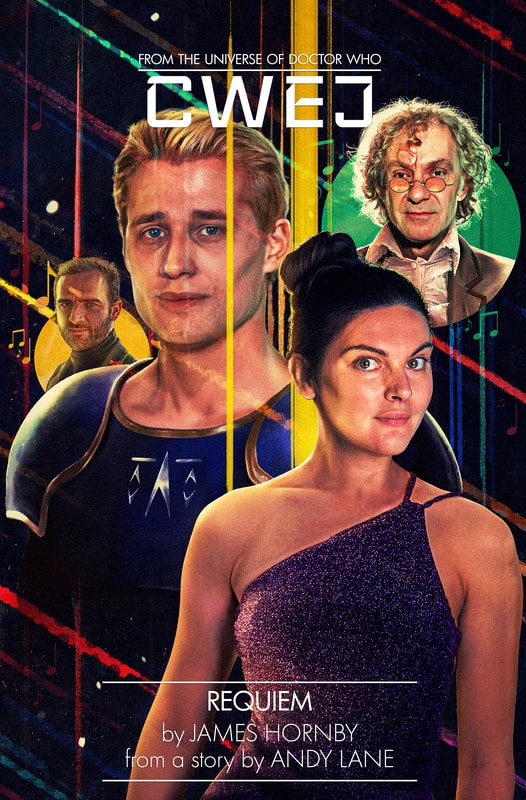 You thought we were joking, didn't you? Well, April Fools! It’s not a prank, it’s an actual plan. Click below to download an exclusive crossover anthology from the Worlds of Arcbeatle Press, presently under metafictional attack from none other than the Noodle Man. Edited by Aristide Twain, The Noodle Incident spans fifteen exclusive, noodly vignettes — plus extras — and puts the spotlight on the self-aggrandising spaghetti-man… whether any of our other characters like it or not. Penned by L. Alves, Ismaeel Clarke, Ostara Gale, James Hornby, Lena Mactíre, Theta Mandel, Callum Phillpott, Plum Pudding, Shergar Sahcahgar, Aristide Twain, and James Wylder, the stories feature exclusive glimpses into the reams of Auteur, Dionus, 10,000 Dawns, Academy 27, Starlight Endeavours, Castaways of Ishiok, The Crew of the Copper-Colored Cupids, The Magic Island, and Jenny Over-There: The Nine-Two-Five Universe, all under attack from the same inexplicable menace. Sharp-eyed readers might even spot connections to past 10,000 Dawns April Fools’ Day events — and perhaps a few more clues about what really lies ahead… though the extended Noodle Man Adventures print run might have to wait. Click below to download The Noodle Incident as a PDF or an ePub file.
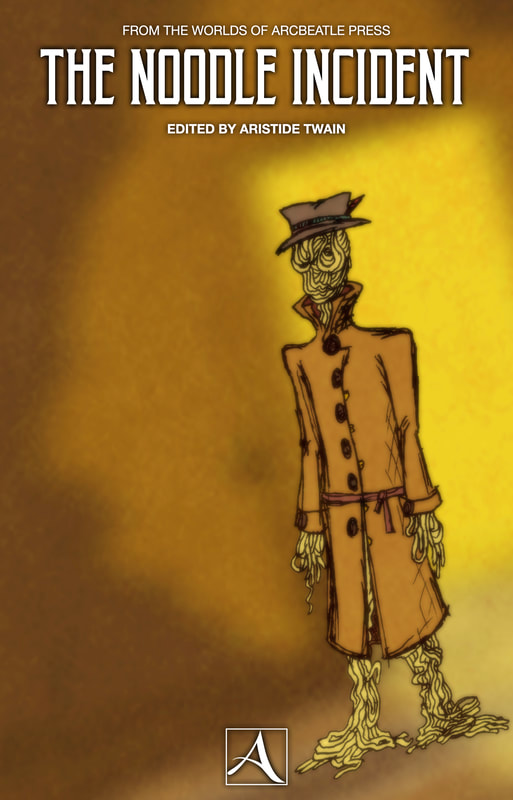 “THE NOODLE INCIDENT”: BRAND-NEW “THE NOODLE MAN” SERIES LAUNCHES WITH EXCLUSIVE ARCBEATLE PRESS CROSSOVER SERIAL ON APRIL 1ST By Aristide Twain In recent years, Arcbeatle Press has continued to blaze a trail for independent science-fiction and fantasy publishing, launching multiple new projects spanning a variety of universes. In line with our commitment to quality over quantity, we have naturally decided that the optimal thing to do at this time is to launch yet another one. As soon as we decided to add even more prose to our editors’ workload, it became obvious that there could only be one focus character worthy of the endeavour: we speak of course of the Noodle Man, created by Plum Pudding and memorably used in such notorious successes as “that time they joked about him with friends once”. Some might believe that anchoring a long-running book series on an untested, unpublished character whose premise begins and ends with “he’s a man made of noodles who hums to himself a lot” is, to name a few, “insane”, “a really bad idea”, or “an April Fools’ joke… gotta be… right? right?!”. If you recognise yourself or a family member in one or more of these statements, we can only recommend therapy, meditation, and of course a healthy diet of noodles and chocolate eggs. The rest of you can look forward to “The Noodle Incident”, an exclusive crossover serial featuring such Arcbeatle hallmarks as 10,000 Dawns, Auteur, Dionus, SIGNET, Starlight Endeavours, Coloth, and many more. The Noodle Man deserved an introduction in style, and we could think of nothing better than a clipshow-style compilation of disparate vignettes held together with the barest excuse for a connective thread. “You might think that we’re using these established series with crass, cynical commercialism,” says The Noodle Incident editor Aristide Twain, “that we’re exploiting their existing fanbases to forcibly establish the largely unknown Noodle Man as a central character within the worlds of Arcbeatle Press overnight. It’s certainly always a risk, with big corporate-driven crossover events, that you lose sight of the artistic integrity of each individual project, in favour of the entire cosmos bending around the new guy with something to sell. That’s certainly been known to happen, so I understand why people would be concerned that it might occur with The Noodle Incident. It’s a very sensible fear to have. But, on the other hand, I seem to have forgotten what I was going to say after the ‘but’.” “The Noodle Incident” will be released today, April 1st, 2024, on the present website as an exclusive ebook. In addition, the first book of “The Noodle Man: Arc 1: The Book of the Noodle Man”, provisionally entitled “Book 1: A Really Incredible Character’s Kaleidoscopically Reimagined, Out-there Lasagna Life”, is now available for preorder. Inquiries may be sent to [email protected] 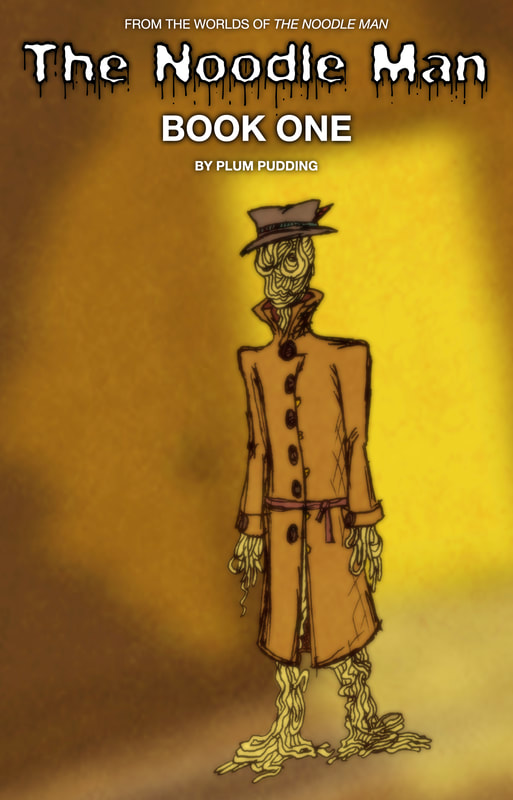  During the pandemic lockdown, readers discovered the adventures of the students of Academy 27, making it the most-read online series of all time from Arcbeatle Press. Now, the series is coming to print for the first time on March 26th, 2024.
Academy 27 is a slice-of-life series following the lives, loves, and dramas of a group of high school students – with a twist: they’re in school on a future Mars, renamed Gongen, where robot dogs, exchange students from other planets, and friendly cyborgs cause chaos and intrigue. On top of everything else, while they’re trying to do their best in their classes, war seems to be brewing between Gongen and Earth. “It's a heartfelt series that’s connected with a lot of readers. Whether it's Sang Mi’s struggles with mental health, Ryan’s attempt to make a fresh start in a new home, or Tsetseg’s journey with alienation, you’ll definitely feel something reading these stories,” editor James Wylder said. Set in the same world as Arcbeatle Press and Decipher, Inc.’s WARSONG series, but requiring no prior knowledge, the Academy 27 series features stories from writers such as James Wylder (P.R.O.B.E), Dillon O’Hara (Cwej: Down the Middle), Leo Irons, Andrew Davis (10,000 Dawns), Callum Phillpott (Cyber-Hunt), Kimberley Chiu, Matthew Sychantha, and Aidan Mason (Blood and the Stars). “Readers have been asking for it to come to print, and we can’t wait for a whole new audience to discover these characters now that it is!” Arcbeatle Co-President James Hornby said. Preorders for the Kindle edition are now open, with the print version available for sale on day of release. Preorders can be made here: https://www.amazon.com/dp/B0CX6LHSG7 “Coloth” Series Launches With Arcbeatle Press’s 2023 Winter Anthology, “The Book of the Snowstorm”!12/27/2023 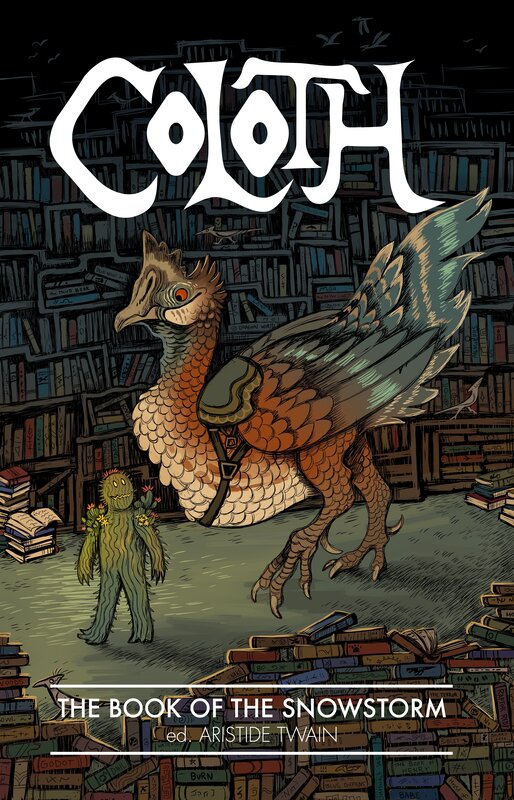 For years, readers of Arcbeatle Press’s releases relating to the Doctor Who universe and beyond have caught frequent glimpses of Coloth, lovable dimension-travelling cactus-boy and unwilling denizen of an infinite Library outside Time and Space. Now, at last, his very own spin-off series — seven years in the making — comes to fruition as the Library plays host to an anthology of winter tales from the worlds of Arcbeatle Press…
The overarching story of The Book of the Snowstorm, written by Aristide Twain (The Crew of the Copper-Colored Cupids, Faction Paradox, Auteur), begins when a mysterious, unceasing Snowstorm traps five strangers in a reading room in the biggest Library in all reality, with naught else to do but read. Among these people are Coloth’s inseparable companions Callum and Maritsa, Novices of the posthuman Bookkeepers, while Coloth himself flies out into the Multiverse with Rich the Birdhemoth to try and save them. The central tale introduces twenty other, all-original stories of varying relevance to the characters’ predicament, spanning such series as Lady Aesculapius, Auteur, The Crew of the Copper-Colored Cupids, Cwej: The Series, Dionus, SIGNET, Starlight Endeavours, Starlight Ranger, and many more. The story of Coloth began as a subplot in War Crimes, a Doctor Who short story by Simon Bucher-Jones printed in the legendary original 1998 Short Trips anthology. In 2017, Nate Bumber (Faction Paradox) and Tyche McPhee Letts (Cwej: The Series, How to Survive the Winter) began to develop the notion of bringing the character in a whole new form, creating a spin-off unlike any other. Last Halloween saw Twain’s own The Cactus and the Corpse, printed in Arcbeatle Press’s Horrors of Arcbeatle (ed. Sean Dillon), formally introduce the world to the new adventures of Coloth, Callum and Maritsa, with fellow Doctor Who universe escapee Auteur guest-starring as main antagonist. “This book was a mad, exhilarating experience,” says editor Aristide Twain. “Coloth: The Book of the Snowstorm is as high-concept as it gets — an infinite Library full of magic and metafiction, and two dozen sci-fi and fantasy tales spanning series and dimensions alike — which is precisely what makes the human element essential. I had to trust in my writers, and the writers, myself included, had to believe in the character. Both exceeded my expectations by far, and I am so excited for people to find out what we’ve all worked so hard to create.” “Coloth: The Book of the Snowstorm” is now available to purchase from Amazon in paperback and ebook formats, from Barnes and Noble in digital format and from the Arcbeatle Press digital store in epub format. Inquiries may be sent to [email protected] |
Arcbeatle PressWe're a small press working to create stories by many diverse and spectacular talents. Archives
July 2024
Categories
All
|
||||||||||


 RSS Feed
Copyright © 2024